I love oatmeal and I love fruit. I was so pleased to receive Seneca Farms Oatmeal & Fruit Vanilla Peach and Apple Cinnamon for review. Oatmeal and fruit...what a wonderful combination! Seneca Farms Oatmeal & Fruit is very yummy and convenient. It comes in 6-oz microwavable cups. All you have to do is heat in microwave for 45 seconds and then eat. You don't need to add water, milk, or any liquid. Two cups are self contained in one package; this is a perfect nutritious snack on the go (think hiking trips or picnics). It also tastes great when it's not heated. I fell in love with it. My kids loved it, too, even the one who doesn't like oatmeal :). It contains chunks of real fruit. We preferred Apple Cinnamon over Vanilla Peach. One of my kids said that theVanilla Peach tasted like Rice Krispies. Seneca Farms Oatmeal & Fruit has no saturated fat, no trans fat, and no cholesterol and is packed with nutrition such as potassium, vitamin C, iron, calcium, and protein. Seneca Farms products are made from fresh fruits and are Kosher certified. I'd definitely recommend this product and be looking for it at our local grocery store.
It’s not groundbreaking news that breakfast provides us and our kids with the nutrition and fuel our bodies need. And we all know that eating oatmeal and other whole grains are an essential part of a healthy diet and promote overall good health. But, busy mornings and finicky kids can make it hard to find the time to make something that is both nutritious and delicious.
Did you know that*… ■Nearly 60% of U.S. parents of children ages 3-17 admit that their child skips breakfast, with more than half of U.S. Moms wishing their child ate a more nutritious breakfast. ■58% of U.S. Moms say they skip breakfast regularly. 46% of Moms who skip breakfast say they do so because they do not have enough time to prepare or eat it. ■57% of single adults say the number one reason they skip breakfast is that they don’t have enough time to prepare it. ■While 71% of U.S. adults agree that breakfast is the most important meal of the day, 67% of those admit to skipping breakfast.
*Results of 2011 Children's Nutrition Survey, conducted by Harris Interactive for Seneca Farms
Seneca Farms Oatmeal & Fruit – launching on April 4 at Wal-Mart – is the perfect choice for anyone who has trouble finding time for breakfast in the morning. In less time than it takes to make a cup of coffee, heat the six-ounce microwaveable cup – no milk or water necessary – in the microwave for 45 seconds. Seneca's Oatmeal &
Fruit has no trans fats or cholesterol, and is a great source of Vitamin C. Two initial flavors are being introduced – Apple Cinnamon and Vanilla Peach. More flavors (Cranberry Apple, Maple & Brown Sugar) and retailers will be added in the coming months.
Seneca Farms Oatmeal & Fruit is not only a quick and healthy breakfast option, but it is a satisfying mid-afternoon snack and it even works as part of a healthy weight loss.
Mexican cuisine is yummy and usually easy and fun to make. Thanks to Ortega, it can be healthy, too. For this review, I received from Ortega the following products (via the Family Review Network):
Ortega Whole Grain Corn Taco Shells (10 shells)
Ortega 40% Less Sodium Taco Seasoning Mix
Ortega Thick & Smooth Taco Sauce -- Medium
Ortega 10 Whole Wheat Tortillas
I made 3 awesome meals out of them: Taco Casserole, Fish Soft Tacos, and Breakfast Burritos.
Taco Casserole (adapted from the recipe provided by Ortega)
Ingredients:
ground turkey
1 medium onion, chopped
chopped garlic (as much as you like or as you can stand :))
1/2 cup water
1/2 cup Ortega Thick & Smooth Taco Sauce -- Medium
1 can (6 oz.) ripe olives, drained, cut in halves, divided
1 package Ortega Taco Seasoning Mix -- 40% Less Sodium
Cook turkey, drain. Cook garlic and onion then add the turkey. Stir in water, taco sauce, some olives and seasoning mix. Cook over low heat for 3-4 minutes.
Layer half of broken taco shells on bottom of greased 12x8 inch baking dish. Cover with half of meat sauce; sprinkle with 1 cup cheese. Repeat with remaining shells, meat sauce, and cheese. Bake for 20 to 25 minutes or until bubbly and cheese is melted. Top with remaining olives, tomatoes, and green onions.
This dinner was a hit. The whole thing was gone in a flash :). My daughter said it tasted like pizza. It was so delicious. Most of our family members asked for seconds. Taste and texture combined to make it a delightful dish. This recipe uses 1 package of 40% Less Sodium Ortega Taco Seasoning Mix. And it's just perfect; I didn't need to add any salt or any other seasoning to the dish at all. The taco shells are whole grain which is an excellent source of fiber; they are also gluten free and cholesterol free and contain no Trans fat.
Fish Soft Tacos
Ingredients:
Ortega Whole Wheat Tortillas
Arrowtooth flounder
olive oil
2 tomatoes, chopped
green onions, chopped
Ortega Thick & Smooth Taco Sauce -- Medium
Tartar sauce
reduced fat shredded sharp cheddar cheese
Directions:
Fry arrowtooth flounder fillets in olive oil, drain.
Warm the tortillas according to package directions.
Cut the fillet into strips. Place fillet strips in the tortillas. I mixed the taco sauce with the tartar sauce and drizzled it on top of the fillet strips. Then I put the toppings (tomatoes, green onions, and shredded cheese) and wrap the tortillas up.
This was so yummy, too! I also got requests for seconds from my crew. First my kids hesitated about the "whole wheat" taste but they so enjoyed what's inside it that the "whole wheat" taste was no issue. I personally was impressed with the taste of the tortillas...better than I expected.
Breakfast Burritos
I scrambled eggs (I used egg substitutes because I have high cholesterol). I warmed the Ortega Whole Wheat Tortillas (left-over from the recipe above). I put the scrambled eggs on the tortillas and topped with chopped tomatoes, chopped green onions, Ortega Taco Sauce, and shredded cheese. Voila...healthy, tasty breakfast was served! By the way, I love the Ortega Taco Sauce.
I'm glad to see that Ortega provides a variety of nutritious products that make healthy food taste so good. Taco shells and tortillas are very versatile; you can use them in so many yummy recipes. For more Ortega family recipes, visit http://www.ortega.com/ .
It is time for a FIRST Wild Card Tour book review! If you wish to join the FIRST blog alliance, just click the button. We are a group of reviewers who tour Christian books. A Wild Card post includes a brief bio of the author and a full chapter from each book toured. The reason it is called a FIRST Wild Card Tour is that you never know if the book will be fiction, non~fiction, for young, or for old...or for somewhere in between! Enjoy your free peek into the book!
You never know when I might play a wild card on you!
***Special thanks to Anna Coelho Silva | Publicity Coordinator, Book Group | Strang Communications for sending me a review copy.***
ABOUT THE AUTHOR:
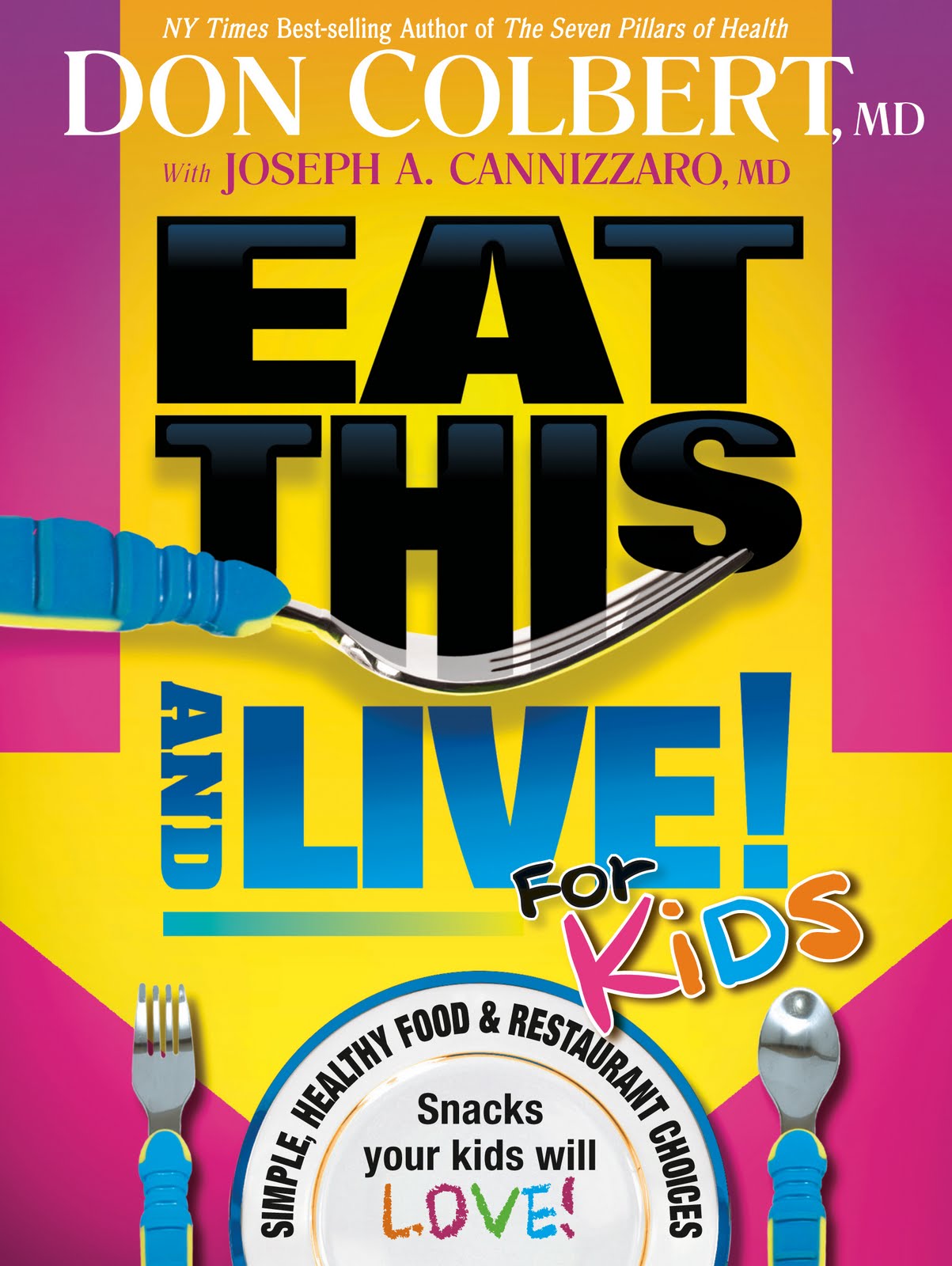
Don Colbert, MD, is board-certified in family practice and anti-aging medicine and has received extensive training in nutritional and preventative medicine. He is the author of numerous books, including two New York Times best sellers, Dr. Colbert’s “I Can Do This” Diet and The Seven Pillars of Health.
Joseph A. Cannizzaro, MD, has practiced pediatric medicine for thirty years with specialties in developmental pediatrics, nutrition, and preventive medicine. He is the founder and managing pediatrician for the Pediatricians Care Unit in Longwood, Florida.
Here's a video about the adult version, Eat This and Live!:
Product Details:
List Price: $17.99
Paperback: 192 pages
Publisher: Siloam; 1 edition (September 7, 2010)
Language: English
ISBN-10: 1616381388
ISBN-13: 978-1616381387
AND NOW...THE FIRST CHAPTER:
EATING HABITS OF
THE NEXT GENERATION
Eating Habits and Our Future
How Has an entire generation of hefty eaters changed the face of the world? By starting young. And once again, this unflattering trend originated in America. In the United States, 17.1 percent of our children and adolescents―that's 2.5 million youth―are now reported to be either overweight or obese.
As a result of childhood obesity, we are seeing a dramatic rise in type 2 diabetes throughout the country. And because of the connection obesity has with hypertension, hypercholesterolemia (high cholesterol), and heart disease, experts are predicting a dramatic rise in heart disease as our children become adults. The Centers for Disease Prevention and Control (CDC) reports that overweight teens stand a 70 percent chance of becoming overweight adults, and that is increased to 80 percent
if at least one parent is overweight or obese. Because of that, heart disease and type 2 diabetes are expected to begin at a much earlier age in those who fail to beat the odds.2 Overall, this is the first generation of children that is not expected to live as long as their parents, and they will be more likely to suffer from disease and illness.
If you do not take charge of your food choices for yourself, at least do it for your children. Children follow by example, by mirroring the behavior of their parents. Don't tell them to make healthy eating choices without doing it yourself. I'm sure most of you love your children and are good parents. But ask yourself: Do you love your children enough to make the necessary lifestyle changes? Do you love them enough to educate them on what foods to eat and what foods to avoid? Do you love them enough to keep junk food out of your house and instead make healthy food more available? Do you love them enough to exercise regularly and lead by example?
If you answered yes to those questions, it is important that you not only take action right now but also that you make changes for them that last a lifetime.
But let me be honest; this is not an easy fight when it involves your children's lives. As the little boxes of information on this page illustrate, the culture in which your children are growing up is saturated with junk food that is void of nutrition but high in toxic fats, sugars, highly processed carbohydrates, and food additives. Consuming these foods has become part of childhood.
You can do it, but you must be prepared to stand strong! That's why I am ecstatic that you have picked up this book. I believe you now hold a key to truly changing your life and your children's lives.
Stand Strong!
If you're planning on taking a stand against this garbage-in, garbage-out culture, expect some opposition from every front. During the course of a year, the typical American child will watch more than thirty thousand television commercials, with many of these advertisements pitching fast-food or junk food as delicious “must-eats.” For years, fast food franchises have enticed children into their restaurants with kids' meal toys, promotional giveaways, and elaborate playgrounds. It has obviously worked for McDonald's: about 90 percent of American children between the ages of three and nine set foot in one each month.
It's All Part of the Plan
Fast-food establishments spend billions of dollars on research and marketing. They know exactly what they are doing and how to push your child's hot button. They understand the powerful impact certain foods can have. That is why comfort foods often do more than just fill the stomach; they bring about memories of the fair, playgrounds, toys, backyard birthday bashes, Fourth of July When your kids can't visit the Golden parties, childhood friends . . . the list goes on. Advertisers have keyed into this and products―most of which are brought learned to use the sight of food to stimulate the same fond childhood memories.
School Cafeteria or Fast Food Franchise?
When your kids can't visit the Golden Arches, it comes to them. Fast-food products―most of which are brought in by franchises―are sold in about 30 percent of public high school cafeterias and many elementary cafeterias.
An Alarming Trend in Children's Health
By teaching your children healthy eating habits, you can keep them at a healthy weight. Also, the eating habits your children pick up when they are young will help them maintain a healthy lifestyle when they are adults. The challenges we face are imposing. The state of children's health today is, according to recent measures, at its most dire. The rise in rates of complex, chronic childhood disorders has been well profiled. Here are some concrete examples of the current state of children's health:
Cancer remains the leading cause of death by disease in children.5
Obesity is epidemic.
Fifty percent of children are overweight.6
Diabetes now affects 1 in every 500 children. Of those children newly diagnosed with diabetes, the percentage with type 2 (“adult-onset”) has risen from less than 5 percent to nearly 50 percent in a ten-year period.
Asthma is the most prevalent chronic disease affecting American children, leading to 15 million missed days of school per year. Since 1980, the percentage of children with asthma has almost tripled.
Approximately 1 in 25 American children now suffer from food allergies.
From 1997 to 2007, the prevalence of reported food allergy increased 18 percent among children under the age of eighteen years.
One in 6 children is diagnosed with a significant neurodevelopmental disability, including 1 in 12 with ADHD. Autism affects 1 in 150 U.S. children, an extraordinary rise in prevalence.
Babies in one study were noted, at birth, to have an average of 200 industrial chemicals and pollutants present in their umbilical cord blood.
These statistics are sobering indeed, and perhaps the most sobering is the rise in childhood obesity. Why? Obesity plays a part in several other chronic illnesses that are also on the rise among children. And there's an unwelcome side effect―more kids are being put on prescription medications for obesity-related chronic diseases. Across the board, we are witnessing increases in prescriptions for children with high blood pressure, high cholesterol, type 2 diabetes, depression, attention-deficit/hyperactivity disorder, and asthma. There must be a better way.
Top Three Tips for Parents
1. Lead by example. Your child will have an extremely difficult time making healthy eating choices and exercising
regularly if you don't consistently show him or her how.
2. Take baby steps that lead to lasting changes. If your child is overweight, avoid diets that promise instant
3. Take your time as you replace your child's old habits with healthy ones. This goes hand in hand with tip #2.
You're in this for the long haul. It takes time to adapt to a new lifestyle. Be patient as he or she adjusts to the new eating habits and activities that you will be introducing.
What we need now is an absolute paradigm shift. No longer are the “one drug, one disease” solutions of the past appropriate. These are times that demand out-of-the-box thinking. That's where this book can help. If your child is overweight or you want to lower his or her risk of becoming overweight down the road, there are many positive, natural ways you can address the situation. In this book, Dr. Cannizzaro and I provide you with information and ideas to help you help your child.
Understanding Childhood Obesity
Now that we've shared the bad news about the childhood obesity epidemic in the United States, let's make sure you really understand the terms overweight and obese. Many people have a general sense as to how these words are different, yet in recent years the delineation has become clearer. Various health organizations, including the CDC and the National Institutes
of Health (NIH), now officially define these terms using the body mass index (BMI), which factors in a person's weight relative to height. Most of these organizations define an overweight adult (twenty years of age and older) as having a BMI between 25 and 29.9, while an obese adult is anyone who has a BMI of 30 or higher.12 For children and teens, BMI is measured differently, allowing for the normal variations in body composition between boys and girls and at various ages.
For ages two to nineteen, the BMI (or BMI-for-age) is pinpointed on a growth chart to determine the corresponding age- and sex-specific percentile.
· Overweight is defined as a BMI at or above the 85th percentile and lower than the 95th percentile.
· Obesity is defined as a BMI at or above the 95th percentile for children of the same age and sex.
BMI is the most widely accepted method used to determine body fat in children and adults because it's easy to measure a person's height and weight. However, while BMI is an acceptable screening tool for initial assessment of body composition, please remember that it is not a direct measure of body fatness. There are other factors that can affect body composition, and your child's doctor can discuss these with you.
If you think your child may be overweight, start by talking to his or her pediatrician. (See the box on the next page for some suggested questions to ask your child's doctor.) After determining your child's BMI and targeting a healthy weight range for your child, make a plan together as a family. It's a good idea to include any regular caregivers in this plan as well. Set a goal for the whole family to get lots of exercise and eat a healthy, well-balanced diet. Keep reading for more ways to help your
family!
Wondering About Your Child's Weight?
Five Questions to Ask Your Pediatrician
I understand that you probably don't want to talk about the possibility that your child may not be at a healthy weight. To help make this as painless as possible, I recommend asking your doctor the following questions to get the conversation started.
1. What is a healthy weight for my child's height?
Your doctor will use a growth chart to show you how your child is growing and give you a healthy weight range for your child. The doctor may also tell you your child's body mass index (BMI). The BMI uses a person's height and weight to determine the amount of body fat.
2. Is my child's weight putting him or her at risk for any illnesses?
Based on your family history and other factors, your doctor can help you to determine what health risks your child may be facing. Overweight, inactive children with a family history of type 2 diabetes have an increased risk of being diagnosed with the disease. High blood pressure can also occur in overweight children.
3. How much exercise does my child need?
The National Association for Sport and Physical Education recommends at least one hour of exercise a day. Your doctor will be able to suggest specific ways to help your child, such as walking the dog, playing catch instead of video games, and other forms of activity.
4. Does my child need to go on a diet?
Although an overweight child's eating habits will probably need to change, I don't advise using the word diet because it focuses on short-term eating habits that are rarely sustainable for long-term health. Children (and adults) who become chronic dieters are setting themselves up for problems with their metabolism later in life. A healthier approach is to put your whole family on the path to a healthy lifestyle with gradual but permanent changes. The recommendations in this book are a great place to start.
5. How do I talk about weight without hurting my child's feelings?
Your child might be sensitive about his or her weight, especially if he or she is getting teased. Above all, the message must never be, “You're fat,” or “You need to lose weight.” Instead, it should be, “Our family needs to make better choices about eating and being more active so that we all can be healthy.”
Why Food Choices Matter
All men are created equal, but all foods are not! In fact, some food should not be labeled “food” but rather “consumable product” or “edible, but void of nourishment.” Living foods―fruits, vegetables, grains, seeds, and nuts―exist in a raw or close-to-raw state and are beautifully packaged in divinely created wrappers called skins and peels. Living foods look robust, healthy, and alive. They have not been bleached, refined or chemically enhanced and preserved. Living foods are plucked, harvested squeezed―not processed, packaged, and put on a shelf.
Dead foods are the opposite. They have been altered in every imaginable way to make them last as long as possible and be as addictive as possible. That usually means the manufacturer adds considerable amounts of sugar and man-made fats that involve taking various oils and heating them to high temperatures so that the nutrients die and become reborn as a deadly, sludgy substance that is toxic to our bodies.
Life breeds life. Death breeds death. When your child eats living foods the enzymes in their pristine state interact with his or her digestive enzymes. The other natural ingredients God put in them―vitamins, minerals, phytonutrients, antioxidants and more―flow into your child's system in their natural state. These living foods were created to cause your child's digestive system, bloodstream, and organs to function at optimum capacity.
Dead food hit your child's body like a foreign intruder. Chemicals, including preservatives, food additives, and bleach agents place a strain on the liver. Toxic man-made fats begin to form in your child's cell-membranes; they become stored as fat in your child's body and form plaque in his or her arteries. Your child's body does its best to harvest the tiny traces of good from these deadly foods, but in the end he or she is undernourished and overweight.
If you want your child to be a healthy, energetic person rather than someone bouncing between all-you-can-eat buffets and fast-food restaurants, take his or her eating habits seriously. Now is the time to help your son or daughter make the change to living foods.
Isn't it Really Just Genetics?
For every obese person, there is a story behind the excessive weight gain. Growing up, I would often hear it said of an obese person that she was just born fat, or he takes after his daddy. There s some truth in both of those. Genetics count when it comes to obesity. In 1988, the New England Journal of Medicine published a Danish study that observed five hundred forty
people who had been adopted during infancy. The research found that adopted individuals had a much greater tendency to end up in the weight class of their biological parents rather than their adopted parents. Separate studies have proven that twins who were raised apart also reveal that genes have a strong influence on gaining weight or becoming overweight. There is a significant genetic predisposition to gaining weight. Still, that does not fully explain the epidemic of obesity seen in the United States over the past thirty years. Although an individual may have a genetic predisposition to become obese, environment plays a major role as well. I like the way author, speaker, and noted women s physician Pamela Peeke said it: Genetics may load the gun, but environment pulls the trigger. Many patients I see come into my office thinking they have inherited their fat genes, and therefore there is nothing they can do about it. After investigating a little, I usually find that they simply inherited their parents propensity for bad choices of foods, large portion sizes, and poor eating habits. If your child is over weight, he or she may have an increased number of fat cells, which means your child will have a tendency to gain weight if you choose to provide the wrong types of foods, large portion sizes, and allow him or her to be inactive. But you should also realize that most people can over ride their genetic makeup for obesity by making the correct dietary and
lifestyle choices. Unfortunately, many parents forget that to make these healthy choices, it helps to surround a child with a
healthy environment.
REVIEW: I was pleasantly surprised by this cool book. It's packed with valuable information regarding healthy eating and healthy living while also being vibrantly colorful and attractive. The format looks similar to a magazine. Almost every page is accompanied with color photos. Charts, cool facts, and quizzes make the book even more interesting. Topics covered in this book include the basics of good nutrition, healthy diet for pregnant women, breastfeeding, healthy food choices for babies and toddlers, healthy habits from preschool to preteen, what to drink, supplements, exercise, toxins in food, special diets, fighting diabetes through diet, healthier food choices at fast-food restaurants, and more. It's really handy to look up the "Dr. Colbert Approved" lists of groceries and lists of healthy food items from different restaurants before heading out to get groceries or to eat out. I was glad to see a personal note from Dr. Don Colbert introducing his Best Friend (mine, too), Jesus, at the end of the book. Check out this fun, practical health & fitness guidebook for kids! By the way, my 9 year old son and 17 year old daughter enthusiastically looked through some pages by themselves :).