Product Details
Format: Jacketed Hardcover
Trim Size: 6.30 x 9.30 x 0.80
Page Count: 218
Retail Price: $24.99
ISBN: 9780849920691
My Thoughts and Review: Outlive Your Life is a wake-up call kind of book that invites readers to put compassion into action and to make an eternal impact that outlives their lives. The world needs Christians to step up and be Christlike and act like the early Christians in Acts. God used those ordinary people then to change the world and He still does now. "You want to live in such a way that the world will be glad you did." (from page 4) Mr. Lucado helps readers ponder the truth and examples found in the first 12 chapters of Acts. Outlive Your Life reminds me of Don't Waste Your Life by John Piper, True Religion by Palmer Chinchen, and The Butterfly Effect & The Boy Who Changed the World by Andy Andrews. They share the same theme: We are created by God to make a difference in this world. "For we are God's workmanship, created in Christ Jesus to do good works, which God prepared in advance for us to do." (Ephesians 2:10)
This book is easy to read. I enjoy reading Max Lucado books. I've always thought he's a gifted writer but now I also think he could have been a comedian if he wanted to :). He is funny and yet insightful. I chose to overlook the imaginative add-ons (to the Biblical account) which is his style. I really like the questions for discussion and the ideas for action found in the back of the book. I would recommend this book to others because the message is important and definitely needed in this me&mine culture.
How are you living the one and only unique life that God has given you? You have a choice to live selfishly for yourself or to live for God and serve Him by serving and helping others, especially those in need. You are given an opportunity to do something to change what is broken in this world. What are you waiting for? Love like Jesus does!!!
"Let my heart be broken by the things that break the heart of God." (~Bob Pierce, founder of World Vision)
Max Lucado has made it his goal to help World Vision find sponsors for 25,000 children to help commemorate his 25 years of inspirational writing.
You can sponsor a child and help reach this goal in the following ways:
1. Sponsor a Child at a participating bookstore.
2. Sponsor a Child at one of the shows for the Make a Difference Tour.
3. Sponsor a Child online here: http://www.maxlucado.com/worldvision/.
100% of the author royalties from the Outlive Your Life book will benefit children and families through World Vision and other ministries of faith-based compassion.
~I received this book free from the publisher through the BookSneeze.com book review bloggers program. I was not required to write a positive review. The opinions I have expressed are my own.
Note: Please turn off my music playlist at the bottom of this page before starting the videos.
Showing posts with label compassion. Show all posts
Friday, September 10, 2010
Monday, August 9, 2010
FIRST Wild Card Tour: Be Compassionate--Let the World Know that Jesus Cares
It is time for a FIRST Wild Card Tour book review! If you wish to join the FIRST blog alliance, just click the button. We are a group of reviewers who tour Christian books. A Wild Card post includes a brief bio of the author and a full chapter from each book toured. The reason it is called a FIRST Wild Card Tour is that you never know if the book will be fiction, non~fiction, for young, or for old...or for somewhere in between! Enjoy your free peek into the book!You never know when I might play a wild card on you!
Today's Wild Card author is:
and the book:
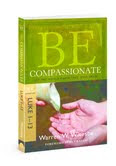
Be Compassionate (Luke 1-13): Let the World Know That Jesus Cares (The BE Series Commentary)
David C. Cook; New edition (July 1, 2010)
ABOUT THE AUTHOR:
Product Details:
List Price: $12.99
Paperback: 192 pages
Publisher: David C. Cook; New edition (July 1, 2010)
Language: English
ISBN-10: 1434765024
ISBN-13: 978-1434765024
AND NOW...THE FIRST CHAPTER:
Hear the Good News!
(Luke 1)
If ever a man wrote a book filled with good news for everybody, Dr. Luke is that man. His key message is, “For the Son of man is come to seek and to save that which was lost” (Luke 19:10). He presents Jesus Christ as the compassionate Son of Man, who came to live among sinners, love them, help them, and die for them.
In this gospel you meet individuals as well as crowds, women and children as well as men, poor people as well as rich people, and sinners along with saints. It’s a book with a message for everybody, because Luke’s emphasis is on the universality of Jesus Christ and His salvation: “good tidings of great joy, which shall be to all people” (Luke 2:10).
Dr. Luke is named only three times in the New Testament: in Colossians 4:14; 2 Timothy 4:11; and Philemon 24. He wrote Acts (compare Luke 1:1–4 with Acts 1:1) and traveled with Paul (note the “we” sections in Acts 16:10–17; 20:4–15; 21:1–18, and 27:1—28:16). He was probably a Gentile (compare Colossians 4:11 and 14) and was trained as a physician. No wonder he began his book with detailed accounts of the births of two important babies! No wonder he emphasized Christ’s sympathy for hurting people! He wrote with the mind of a careful historian and with the heart of a loving physician.
The gospel of Luke was written for Theophilus (“lover of God”), probably a Roman official who had trusted Christ and now needed to be established in the faith. It’s also possible that Theophilus was a seeker after truth who was being taught the Christian message, because the word translated instructed in Luke 1:4 gives us our English word catechumen, “someone who is being taught the basics of Christianity.”
The life and message of Christ were so important that many books had already been written about Him, but not everything in them could be trusted. Luke wrote his gospel so that his readers might have an accurate and orderly narrative of the life, ministry, and message of Jesus Christ. Luke had carefully researched his material, interviewed eyewitnesses, and listened to those who had ministered the Word. Most important, he had the guidance of the Holy Spirit. The phrase from the very first (Gk. anothen)
can be translated “from above,” as it is in John 3:31 and 19:11. It speaks of the inspiration of the Spirit of God on the message that Luke wrote.
In this first chapter, Luke tells us how God’s wonderful news came to different people and how they responded to it. You will discover four different responses.
1. UNBELIEF (1:5–25)
It was indeed a dark day for the nation of Israel. The people had heard no prophetic word from God for four hundred years, not since Malachi had promised the coming of Elijah (Mal. 4:5–6). The spiritual leaders were shackled by tradition and, in some instances, corruption; and their king, Herod the Great, was a tyrant. He had nine (some say ten) wives, one of whom he had executed for no apparent reason. But no matter how dark the day, God always has His devoted and obedient people.
A faithful priest (vv. 5–7). Zacharias (“Jehovah has remembered”; Zechariah in NIV) and Elizabeth (“God is my oath”) were a godly couple who both belonged to the priestly line. The priests were divided into twenty-four courses (1 Chron. 24), and each priest served in the temple two weeks out of the year. In spite of the godlessness around them, Zacharias and Elizabeth were faithful to obey the Word of God and live blamelessly.
Their only sorrow was that they had no family, and they made this a matter of constant prayer. Little did they know that God would answer their prayers and give them, not a priest, but a prophet! And no ordinary prophet, for their son would be the herald of the coming King!
A fearful priest (vv. 8–17). The priests on duty drew lots to see which ministries they would perform, and Zacharias was chosen to offer incense in the Holy Place. This was a high honor that was permitted to a priest but once in a lifetime. The incense was offered daily before the morning sacrifice and after the evening sacrifice, about three o’clock in the afternoon. It was probably the evening offering that was assigned to Zacharias.
You have probably noticed that God often speaks to His people and calls them while they are busy doing their daily tasks. Both Moses and David were caring for sheep, and Gideon was threshing wheat. Peter and his partners were mending nets when Jesus called them. It is difficult to steer a car when the engine is not running. When we get busy, God starts to direct us.
Luke mentions angels twenty-three times in his gospel. There are innumerable angels (Rev. 5:11), only two of which are actually named in Scripture: Michael (Dan. 10:13, 21; 12:1; Jude 9; Rev. 12:7) and Gabriel (Dan. 8:16; 9:21; Luke 1:19, 26). When Gabriel appeared by the altar, Zacharias was frightened, for the angel’s appearance could have meant divine judgment.
“Fear not” is a repeated statement in the gospel of Luke (1:13, 30; 2:10; 5:10; 8:50; 12:7, 32). Imagine how excited Zacharias must have been when he heard that he and Elizabeth were to have a son! “Rejoicing” is another key theme in Luke, mentioned at least nineteen times. Good news brings joy!
Gabriel instructed him to name his son John (“Jehovah is gracious”) and to dedicate the boy to God to be a Nazarite all of his life (Num. 6:1–21). He would be filled with the Spirit before birth (Luke 1:41) and would be God’s prophet to present His Son to the people of Israel (see John 1:15–34). God would use John’s ministry to turn many people back to the Lord, just as Isaiah had promised (Isa. 40:1–5).
A faithless priest (vv. 18–22). You would think that the presence of an angel and the announcement of God’s Word would encourage Zacharias’s faith, but they did not. Instead of looking to God by faith, the priest looked at himself and his wife and decided that the birth of a son was impossible. He wanted some assurance beyond the plain word of Gabriel, God’s messenger, perhaps a sign from God.
This, of course, was unbelief, and unbelief is something God does not accept. Zacharias was really questioning God’s ability to fulfill His own Word! Had he forgotten what God did for Abraham and Sarah (Gen. 18:9–15; Rom. 4:18–25)? Did he think that his physical limitations would hinder Almighty God? But before we criticize Zacharias too much, we should examine ourselves and see how strong our own faith is.
Faith is blessed, but unbelief is judged, and Zacharias was struck dumb (and possibly deaf, Luke 1:62) until the Word was fulfilled. “I believed, and therefore have I spoken” (2 Cor. 4:13). Zacharias did not believe; therefore he could not speak. When he left the holy place, he was unable to give the priestly benediction to the people (Num. 6:22–27) or even tell them what he had seen. Indeed, God had given him a very personal “sign” that he would have to live with for the next nine months.
A favored priest (vv. 23–25). Zacharias must have had a difficult time completing his week of ministry, not only because of his handicap, but also because of his excitement. He could hardly wait to return “unto the hill country” (Luke 1:39) where he lived, to tell his wife the good news.
God kept His promise and Elizabeth conceived a son in her old age. There is nothing too hard for the Lord (Jer. 32:17). Apparently, the amazement and curiosity of the people forced her to hide herself even as she praised the Lord for His mercy. Not only was she to have a son, but the birth of her son was also evidence that the Messiah was coming! These were exciting days indeed!
2. FAITH (1:26–38)
In the sixth month of Elizabeth’s pregnancy, Gabriel brought a second birth announcement, this time to a young virgin in Nazareth named Mary. At least there was variety in his assignments: an old man, a young woman; a priest, a descendent of David the king; the temple, a common home; Jerusalem, Nazareth; unbelief, faith.
The people in Judah disdained the Jews in Galilee and claimed they were not “kosher” because of their contacts with the Gentiles there (Matt. 4:15). They especially despised the people from Nazareth (John 1:45–46). But God in His grace chose a girl from Nazareth in Galilee to be the mother of the promised Messiah!
When it comes to Mary, people tend to go to one of two extremes. They either magnify her so much that Jesus takes second place (Luke 1:32), or they ignore her and fail to give her the esteem she deserves (Luke 1:48). Elizabeth, filled with the Spirit, called her “the mother of my Lord” (Luke 1:43), and that is reason enough to honor her.
What do we know about Mary? She was a Jewess of the tribe of Judah, a descendant of David, and a virgin (Isa. 7:14). She was engaged to a carpenter in Nazareth named Joseph (Matt. 13:55), and apparently both of them were poor (Lev. 12:8; Luke 2:24). Among the Jews at that time, engagement was almost as binding as marriage and could be broken only by divorce. In fact, the man and the woman were called “husband” and “wife” even before the marriage took place (compare Matt. 1:19 and Luke 2:5). Since Jewish girls married young, it is likely that Mary was a teenager when the angel appeared to her.
Mary’s surprise (vv. 26–33). When you consider Gabriel’s greeting, you can well understand why Mary was perplexed and afraid: “Greetings, you who are highly favored! The Lord is with you!” (NIV) (The phrase Blessed art thou among women is not found here in many Greek manuscripts. You find it in Luke 1:42.) Why would an angel come to greet her? In what way was she “highly favored” (“greatly graced”) by God? How was God with her?
Mary’s response reveals her humility and honesty before God. She certainly never expected to see an angel and receive special favors from heaven. There was nothing unique about her that such things should happen. If she had been different from other Jewish girls, as some theologians claim she was, then she might have said, “Well, it’s about time! I’ve been expecting you!” No, all of this was a surprise to her.
Gabriel then gave her the good news: She would become the mother of the promised Messiah whom she would name Jesus (“Jehovah is salvation”; see Matt. 1:21). Note that Gabriel affirmed both the deity and the humanity of Jesus. As Mary’s son, He would be human; as Son of the Highest (Luke 1:32), He would be the Son of God (Luke 1:35). “For unto us a child is born [His humanity], unto us a son is given [His deity]” (Isa. 9:6). The emphasis is on the greatness of the Son (cf. Luke 1:15), not the greatness of the mother.
But He would also be a king, inherit David’s throne, and reign over Israel forever! If we interpret literally what Gabriel said in Luke 1:30–31, then we should also interpret literally what he said in Luke 1:32–33. He was referring to God’s covenant with David (2 Sam. 7) and His kingdom promises to the people of Israel (Isa. 9:1–7; 11—12; 61; 66; Jer. 33).
Jesus came to earth to be the Savior of the world, but He also came to fulfill the promises God made to the Jewish fathers. Today, Jesus is enthroned in heaven (Acts 2:29–36), but it is not on David’s throne. One day Jesus will return and establish His righteous kingdom on earth, and then these promises will be fulfilled.
Mary’s surrender (vv. 34–48). Mary knew what would happen, but she did not know how it would happen. Her question in Luke 1:34 was not an evidence of unbelief (cf. Luke 1:18); rather, it was an expression of faith. She believed the promise, but she did not understand the performance. How could a virgin give birth to a child?
First, Gabriel explained that this would be a miracle, the work of the Holy Spirit of God. Joseph, her betrothed, would not be the father of the child (Matt. 1:18–25), even though Jesus would be legally identified as the son of Joseph (Luke 3:23; 4:22; John 1:45; 6:42). It’s possible that some people thought Mary had been unfaithful to Joseph and that Jesus was “born of fornication” (John 8:41). This was a part of the pain that Mary had to bear all her life (Luke 2:35).
Gabriel was careful to point out that the Baby would be a “holy thing” and would not share the sinful human nature of man. Jesus knew no sin (2 Cor. 5:21), He did no sin (1 Peter 2:22), and He had no sin (1 John 3:5). His body was prepared for Him by the Spirit of God (Heb. 10:5) who “overshadowed” Mary. That word is applied to the presence of God in the Holy of Holies in the Jewish tabernacle and temple (Ex. 40:35). Mary’s womb became a Holy of Holies for the Son of God!
The angel ended his message by giving Mary a word of encouragement: Her aged relative Elizabeth was with child, proving that “with God nothing shall be impossible.” God gave a similar word to Abraham when He announced the birth of Isaac (Gen. 18:14). That our God can do anything is the witness of many, including Job (Job 42:2), Jeremiah (Jer. 32:17), and even our Lord Jesus (Matt. 19:26). I personally like the translation of this verse found in the 1901 American Standard Version: “For no word of God shall be void of power.” God accomplishes His purposes through the power of His Word (Ps. 33:9).
Mary’s believing response was to surrender herself to God as His willing servant. She experienced the grace of God (Luke 1:30) and believed the Word of God, and therefore she could be used by the Spirit to accomplish the will of God. A “handmaid” was the lowest kind of female servant, which shows how much Mary trusted God. She belonged totally to the Lord, body (Luke 1:38), soul (Luke 1:46), and spirit (Luke 1:47). What an example for us to follow (Rom. 12:1–2)!
3. JOY (1:39–56)
Now that Mary knew she was to become a mother, and that her kinswoman Elizabeth would give birth in three months, she wanted to see Elizabeth so they could rejoice together. “Joy” is the major theme of this section as you see three persons rejoicing in the Lord.
(1) The joy of Elizabeth (vv. 39–45). As Mary entered the house, Elizabeth heard her greeting, was filled with the Spirit, and was told by the Lord why Mary was there. The one word that filled her lips was “blessed.” Note that she did not say that Mary was blessed above women but among women, and certainly this is true. While we don’t want to ascribe to Mary that which only belongs to God, neither do we want to minimize her place in the plan of God.
The thing that Elizabeth emphasized was Mary’s faith: “Blessed is she that believed” (Luke 1:45). We are saved “by grace … through faith” (Eph. 2:8–9). Because Mary believed the Word of God, she experienced the power of God.
(2) The joy of the unborn son, John (vv. 41, 44). This was probably the time when he was filled with the Spirit as the angel had promised (Luke 1:15). Even before his birth, John rejoiced in Jesus Christ, just as he did during his earthly ministry (John 3:29–30). As John the Baptist, he would have the great privilege of introducing the Messiah to the Jewish nation.
(3) The joy of Mary (vv. 46–56). Hers was a joy that compelled her to lift her voice in a hymn of praise. The fullness of the Spirit should lead to joyful praise in our lives (Eph. 5:18–20), and so should the fullness of the Word (Col. 3:16–17). Mary’s song contains quotations from and references to the Old Testament Scriptures, especially the Psalms and the song of Hannah in 1 Samuel 2:1–10. Mary hid God’s Word in her heart and turned it into a song.
This song is called “The Magnificat” because the Latin version of Luke 1:46 is Magnificat anima mea Dominum. Her great desire was to magnify the Lord, not herself. She used the phrase “He hath” eight times as she recounted what God had done for three recipients of His blessing.
What God did for Mary (vv. 46–49). To begin with, God had saved her (Luke 1:47), which indicates that Mary was a sinner like all of us and needed to trust the Lord for her eternal salvation. Not only had He saved her, but He had also chosen her to be the mother of the Messiah (Luke 1:48). He had “regarded” her, which means He was mindful of her and looked with favor on her. No doubt there were others who could have been chosen, but God chose her! The Lord had indeed showered His grace on her (see 1 Cor. 1:26–28).
Not only was God mindful of her, but He was also mighty for her, working on her behalf (Luke 1:49). Mary would have no problem singing “great things he hath done” (see Luke 8:39; 1 Sam. 12:24; 2 Sam. 7:21–23; and Ps. 126:2–3). Because she believed God and yielded to His will, He performed a miracle in her life and used her to bring the Savior into the world.
What God did for us (vv. 50–53). In the second stanza of her song, Mary included all of God’s people who fear Him from generation to generation. We have all received His mercy and experienced His help. Mary named three specific groups to whom God had been merciful: the helpless (Luke 1:51), the humble (Luke 1:52), and the hungry (Luke 1:53).
The common people of that day were almost helpless when it came to justice and civil rights. They were often hungry, downtrodden, and discouraged (Luke 4:16–19), and there was no way for them to “fight the system.” A secret society of patriotic Jewish extremists called “the Zealots” used violent means to oppose Rome, but their activities only made matters worse.
Mary saw the Lord turning everything upside down: the weak dethrone the mighty, the humble scatter the proud, the nobodies are exalted, the hungry are filled, and the rich end up poor! The grace of God works
contrary to the thoughts and ways of this world system (1 Cor. 1:26–28). The church is something like that band of men that gathered around David (1 Sam. 22:2).
What God did for Israel (vv. 54–55). “He shall save his people from their sins” (Matt. 1:21). In spite of Israel’s destitute condition, the nation was still God’s servant, and He would help the people fulfill His purposes. God was on Israel’s side! He would remember His mercy and keep His promises (Ps. 98:1–3; see also Gen. 12:1–3; 17:19; 22:18; 26:4; 28:14). Were it not for Israel, Jesus Christ could not have been born into the world.
Mary stayed with Elizabeth until John was born, and then she returned to Nazareth. By then, it was clear that she was pregnant, and no doubt the tongues began to wag. After all, she had been away from home for three months, and why, people were likely asking, had she left in such a hurry? It was then that God gave the good news to Joseph and instructed him what to do (Matt. 1:18–25).
4. PRAISE (1:57–80)
God’s blessing was resting abundantly on Zacharias and Elizabeth. He sent them a baby boy, just as He promised, and they named him “John” just as God had instructed. The Jews looked on children as a gift from God and a “heritage from the Lord” (Ps. 127:3–5; 128:1–3), and rightly so, for they are. Israel would not follow the practices of their pagan neighbors by aborting or abandoning their children. When you consider that 1.5 million babies are aborted each year in the United States alone, you can see how far we have drifted from the laws of God.
“The greatest forces in the world are not the earthquakes and the thunderbolts,” said Dr. E. T. Sullivan. “The greatest forces in the world are babies.”
Traditionally, a baby boy would be named after his father or someone else in the family, so the relatives and neighbors were shocked when Elizabeth insisted on the name John. Zacharias wrote “His name is John” on a tablet, and that settled it! Immediately God opened the old priest’s mouth, and he sang a hymn that gives us four beautiful pictures of what the coming of Jesus Christ to earth really means.
The opening of a prison door (v. 68). The word redeem means “to set free by paying a price.” It can refer to the releasing of a prisoner or the liberating of a slave. Jesus Christ came to earth to bring “deliverance to the captives” (Luke 4:18), salvation to people in bondage to sin and death. Certainly we are unable to set ourselves free; only Christ could pay the price necessary for our redemption (Eph. 1:7; 1 Peter 1:18–21).
The winning of a battle (vv. 69–75). In Scripture, a horn symbolizes power and victory (1 Kings 22:11; Ps. 89:17, 24). The picture here is that of an army about to be taken captive, but then help arrives and the enemy is defeated. In the previous picture, the captives were set free, but in this picture, the enemy is defeated so that he cannot capture more prisoners. It means total victory for the people of God.
The word salvation (Luke 1:69, 71) carries the meaning of “health and soundness.” No matter what the condition of the captives, their Redeemer brings spiritual soundness. When you trust Jesus Christ as Savior, you are delivered from Satan’s power, moved into God’s kingdom, redeemed, and forgiven (Col. 1:12–14).
Where did the Redeemer come from? He came from the house of David (Luke 1:69), who himself was a great conqueror. God had promised that the Savior would be a Jew (Gen. 12:1–3), from the tribe of Judah (Gen. 49:10), from the family of David (2 Sam. 7:12–16), born in David’s city, Bethlehem (Mic. 5:2). Both Mary (Luke 1:27) and Joseph (Matt. 1:20) belonged to David’s line. The coming of the Redeemer was inherent in the covenants God made with His people (Luke 1:72), and it was promised by the prophets (Luke 1:70).
Note that the results of this victory are sanctity and service (Luke 1:74–75). He sets us free, not to do our own will, because that would be bondage, but to do His will and enjoy His freedom.
The canceling of a debt (vv. 76–77). Remission means “to send away, to dismiss, as a debt.” All of us are in debt to God because we have broken His law and failed to live up to His standards (Luke 7:40–50). Furthermore, all of us are spiritually bankrupt, unable to pay our debt. But Jesus came and paid the debt for us (Ps. 103:12; John 1:29).
The dawning of a new day (vv. 78–79). Dayspring means “sunrise.” The people were sitting in darkness and death, and distress gripped them when Jesus came; but He brought light, life, and peace. It was the dawn of a new day because of the tender mercies of God (see Matt. 4:16).
The old priest had not said anything for nine months, but he certainly compensated for his silence when he sang this song of praise to God! And how joyful he was that his son was chosen by God to prepare the way for the Messiah (Isa. 40:1–3; Mal. 3:1). John was “prophet of the Highest” (Luke 1:76), introducing to Israel “the Son of the Highest” (Luke 1:32) who was conceived in Mary’s womb by “the power of the Highest” (Luke 1:35).
Instead of enjoying a comfortable life as a priest, John lived in the wilderness, disciplining himself physically and spiritually, waiting for the day when God would send him out to prepare Israel for the arrival of the Messiah. People like Simeon and Anna (Luke 2:25–38) had been waiting for this day for many years, and soon it would come.
God calls us today to believe His good news. Those who believe it experience His joy and want to express their praise to Him. It is not enough for us to say that Jesus is a Savior, or even the Savior. With Mary, we must say, “My spirit hath rejoiced in God my Savior” (Luke 1:47).
QUESTIONS FOR PERSONAL REFLECTION
OR GROUP DISCUSSION
1. Luke emphasizes Christ’s concern for hurting people. Who are some hurting people in your world?
2. Wiersbe highlights four ways people responded to the good news in Luke 1— unbelief, faith, joy, and praise. Where do you see one or more of these responses in your own life currently?
3. Why do you think God often speaks to His people when they are active, as He did to Zacharias (Zechariah)?
4. After the angel announced the joyous news that Zacharias and Elizabeth would have a son, what big mistake did Zacharias make? Why do you suppose he did this?
5. What character traits can be seen in Mary’s response to the angel’s surprising visit?
6. How was Zacharias’s question “How can I be sure of this?” different from Mary’s “How will this be?”
7. What expressions of joy do you read about as Mary visited Elizabeth?
8. According to Mary’s words in 1:46–55, what did God do for Mary? What did God do for others?
9. What four pictures of the incarnation do we see in Zacharias’s hymn (1:68–79)? What do they mean?
10. The results of the victory of salvation are sanctity and service (1:74– 75). Explain what you think these are meant to look like in your life.
(Luke 1)
If ever a man wrote a book filled with good news for everybody, Dr. Luke is that man. His key message is, “For the Son of man is come to seek and to save that which was lost” (Luke 19:10). He presents Jesus Christ as the compassionate Son of Man, who came to live among sinners, love them, help them, and die for them.
In this gospel you meet individuals as well as crowds, women and children as well as men, poor people as well as rich people, and sinners along with saints. It’s a book with a message for everybody, because Luke’s emphasis is on the universality of Jesus Christ and His salvation: “good tidings of great joy, which shall be to all people” (Luke 2:10).
Dr. Luke is named only three times in the New Testament: in Colossians 4:14; 2 Timothy 4:11; and Philemon 24. He wrote Acts (compare Luke 1:1–4 with Acts 1:1) and traveled with Paul (note the “we” sections in Acts 16:10–17; 20:4–15; 21:1–18, and 27:1—28:16). He was probably a Gentile (compare Colossians 4:11 and 14) and was trained as a physician. No wonder he began his book with detailed accounts of the births of two important babies! No wonder he emphasized Christ’s sympathy for hurting people! He wrote with the mind of a careful historian and with the heart of a loving physician.
The gospel of Luke was written for Theophilus (“lover of God”), probably a Roman official who had trusted Christ and now needed to be established in the faith. It’s also possible that Theophilus was a seeker after truth who was being taught the Christian message, because the word translated instructed in Luke 1:4 gives us our English word catechumen, “someone who is being taught the basics of Christianity.”
The life and message of Christ were so important that many books had already been written about Him, but not everything in them could be trusted. Luke wrote his gospel so that his readers might have an accurate and orderly narrative of the life, ministry, and message of Jesus Christ. Luke had carefully researched his material, interviewed eyewitnesses, and listened to those who had ministered the Word. Most important, he had the guidance of the Holy Spirit. The phrase from the very first (Gk. anothen)
can be translated “from above,” as it is in John 3:31 and 19:11. It speaks of the inspiration of the Spirit of God on the message that Luke wrote.
In this first chapter, Luke tells us how God’s wonderful news came to different people and how they responded to it. You will discover four different responses.
1. UNBELIEF (1:5–25)
It was indeed a dark day for the nation of Israel. The people had heard no prophetic word from God for four hundred years, not since Malachi had promised the coming of Elijah (Mal. 4:5–6). The spiritual leaders were shackled by tradition and, in some instances, corruption; and their king, Herod the Great, was a tyrant. He had nine (some say ten) wives, one of whom he had executed for no apparent reason. But no matter how dark the day, God always has His devoted and obedient people.
A faithful priest (vv. 5–7). Zacharias (“Jehovah has remembered”; Zechariah in NIV) and Elizabeth (“God is my oath”) were a godly couple who both belonged to the priestly line. The priests were divided into twenty-four courses (1 Chron. 24), and each priest served in the temple two weeks out of the year. In spite of the godlessness around them, Zacharias and Elizabeth were faithful to obey the Word of God and live blamelessly.
Their only sorrow was that they had no family, and they made this a matter of constant prayer. Little did they know that God would answer their prayers and give them, not a priest, but a prophet! And no ordinary prophet, for their son would be the herald of the coming King!
A fearful priest (vv. 8–17). The priests on duty drew lots to see which ministries they would perform, and Zacharias was chosen to offer incense in the Holy Place. This was a high honor that was permitted to a priest but once in a lifetime. The incense was offered daily before the morning sacrifice and after the evening sacrifice, about three o’clock in the afternoon. It was probably the evening offering that was assigned to Zacharias.
You have probably noticed that God often speaks to His people and calls them while they are busy doing their daily tasks. Both Moses and David were caring for sheep, and Gideon was threshing wheat. Peter and his partners were mending nets when Jesus called them. It is difficult to steer a car when the engine is not running. When we get busy, God starts to direct us.
Luke mentions angels twenty-three times in his gospel. There are innumerable angels (Rev. 5:11), only two of which are actually named in Scripture: Michael (Dan. 10:13, 21; 12:1; Jude 9; Rev. 12:7) and Gabriel (Dan. 8:16; 9:21; Luke 1:19, 26). When Gabriel appeared by the altar, Zacharias was frightened, for the angel’s appearance could have meant divine judgment.
“Fear not” is a repeated statement in the gospel of Luke (1:13, 30; 2:10; 5:10; 8:50; 12:7, 32). Imagine how excited Zacharias must have been when he heard that he and Elizabeth were to have a son! “Rejoicing” is another key theme in Luke, mentioned at least nineteen times. Good news brings joy!
Gabriel instructed him to name his son John (“Jehovah is gracious”) and to dedicate the boy to God to be a Nazarite all of his life (Num. 6:1–21). He would be filled with the Spirit before birth (Luke 1:41) and would be God’s prophet to present His Son to the people of Israel (see John 1:15–34). God would use John’s ministry to turn many people back to the Lord, just as Isaiah had promised (Isa. 40:1–5).
A faithless priest (vv. 18–22). You would think that the presence of an angel and the announcement of God’s Word would encourage Zacharias’s faith, but they did not. Instead of looking to God by faith, the priest looked at himself and his wife and decided that the birth of a son was impossible. He wanted some assurance beyond the plain word of Gabriel, God’s messenger, perhaps a sign from God.
This, of course, was unbelief, and unbelief is something God does not accept. Zacharias was really questioning God’s ability to fulfill His own Word! Had he forgotten what God did for Abraham and Sarah (Gen. 18:9–15; Rom. 4:18–25)? Did he think that his physical limitations would hinder Almighty God? But before we criticize Zacharias too much, we should examine ourselves and see how strong our own faith is.
Faith is blessed, but unbelief is judged, and Zacharias was struck dumb (and possibly deaf, Luke 1:62) until the Word was fulfilled. “I believed, and therefore have I spoken” (2 Cor. 4:13). Zacharias did not believe; therefore he could not speak. When he left the holy place, he was unable to give the priestly benediction to the people (Num. 6:22–27) or even tell them what he had seen. Indeed, God had given him a very personal “sign” that he would have to live with for the next nine months.
A favored priest (vv. 23–25). Zacharias must have had a difficult time completing his week of ministry, not only because of his handicap, but also because of his excitement. He could hardly wait to return “unto the hill country” (Luke 1:39) where he lived, to tell his wife the good news.
God kept His promise and Elizabeth conceived a son in her old age. There is nothing too hard for the Lord (Jer. 32:17). Apparently, the amazement and curiosity of the people forced her to hide herself even as she praised the Lord for His mercy. Not only was she to have a son, but the birth of her son was also evidence that the Messiah was coming! These were exciting days indeed!
2. FAITH (1:26–38)
In the sixth month of Elizabeth’s pregnancy, Gabriel brought a second birth announcement, this time to a young virgin in Nazareth named Mary. At least there was variety in his assignments: an old man, a young woman; a priest, a descendent of David the king; the temple, a common home; Jerusalem, Nazareth; unbelief, faith.
The people in Judah disdained the Jews in Galilee and claimed they were not “kosher” because of their contacts with the Gentiles there (Matt. 4:15). They especially despised the people from Nazareth (John 1:45–46). But God in His grace chose a girl from Nazareth in Galilee to be the mother of the promised Messiah!
When it comes to Mary, people tend to go to one of two extremes. They either magnify her so much that Jesus takes second place (Luke 1:32), or they ignore her and fail to give her the esteem she deserves (Luke 1:48). Elizabeth, filled with the Spirit, called her “the mother of my Lord” (Luke 1:43), and that is reason enough to honor her.
What do we know about Mary? She was a Jewess of the tribe of Judah, a descendant of David, and a virgin (Isa. 7:14). She was engaged to a carpenter in Nazareth named Joseph (Matt. 13:55), and apparently both of them were poor (Lev. 12:8; Luke 2:24). Among the Jews at that time, engagement was almost as binding as marriage and could be broken only by divorce. In fact, the man and the woman were called “husband” and “wife” even before the marriage took place (compare Matt. 1:19 and Luke 2:5). Since Jewish girls married young, it is likely that Mary was a teenager when the angel appeared to her.
Mary’s surprise (vv. 26–33). When you consider Gabriel’s greeting, you can well understand why Mary was perplexed and afraid: “Greetings, you who are highly favored! The Lord is with you!” (NIV) (The phrase Blessed art thou among women is not found here in many Greek manuscripts. You find it in Luke 1:42.) Why would an angel come to greet her? In what way was she “highly favored” (“greatly graced”) by God? How was God with her?
Mary’s response reveals her humility and honesty before God. She certainly never expected to see an angel and receive special favors from heaven. There was nothing unique about her that such things should happen. If she had been different from other Jewish girls, as some theologians claim she was, then she might have said, “Well, it’s about time! I’ve been expecting you!” No, all of this was a surprise to her.
Gabriel then gave her the good news: She would become the mother of the promised Messiah whom she would name Jesus (“Jehovah is salvation”; see Matt. 1:21). Note that Gabriel affirmed both the deity and the humanity of Jesus. As Mary’s son, He would be human; as Son of the Highest (Luke 1:32), He would be the Son of God (Luke 1:35). “For unto us a child is born [His humanity], unto us a son is given [His deity]” (Isa. 9:6). The emphasis is on the greatness of the Son (cf. Luke 1:15), not the greatness of the mother.
But He would also be a king, inherit David’s throne, and reign over Israel forever! If we interpret literally what Gabriel said in Luke 1:30–31, then we should also interpret literally what he said in Luke 1:32–33. He was referring to God’s covenant with David (2 Sam. 7) and His kingdom promises to the people of Israel (Isa. 9:1–7; 11—12; 61; 66; Jer. 33).
Jesus came to earth to be the Savior of the world, but He also came to fulfill the promises God made to the Jewish fathers. Today, Jesus is enthroned in heaven (Acts 2:29–36), but it is not on David’s throne. One day Jesus will return and establish His righteous kingdom on earth, and then these promises will be fulfilled.
Mary’s surrender (vv. 34–48). Mary knew what would happen, but she did not know how it would happen. Her question in Luke 1:34 was not an evidence of unbelief (cf. Luke 1:18); rather, it was an expression of faith. She believed the promise, but she did not understand the performance. How could a virgin give birth to a child?
First, Gabriel explained that this would be a miracle, the work of the Holy Spirit of God. Joseph, her betrothed, would not be the father of the child (Matt. 1:18–25), even though Jesus would be legally identified as the son of Joseph (Luke 3:23; 4:22; John 1:45; 6:42). It’s possible that some people thought Mary had been unfaithful to Joseph and that Jesus was “born of fornication” (John 8:41). This was a part of the pain that Mary had to bear all her life (Luke 2:35).
Gabriel was careful to point out that the Baby would be a “holy thing” and would not share the sinful human nature of man. Jesus knew no sin (2 Cor. 5:21), He did no sin (1 Peter 2:22), and He had no sin (1 John 3:5). His body was prepared for Him by the Spirit of God (Heb. 10:5) who “overshadowed” Mary. That word is applied to the presence of God in the Holy of Holies in the Jewish tabernacle and temple (Ex. 40:35). Mary’s womb became a Holy of Holies for the Son of God!
The angel ended his message by giving Mary a word of encouragement: Her aged relative Elizabeth was with child, proving that “with God nothing shall be impossible.” God gave a similar word to Abraham when He announced the birth of Isaac (Gen. 18:14). That our God can do anything is the witness of many, including Job (Job 42:2), Jeremiah (Jer. 32:17), and even our Lord Jesus (Matt. 19:26). I personally like the translation of this verse found in the 1901 American Standard Version: “For no word of God shall be void of power.” God accomplishes His purposes through the power of His Word (Ps. 33:9).
Mary’s believing response was to surrender herself to God as His willing servant. She experienced the grace of God (Luke 1:30) and believed the Word of God, and therefore she could be used by the Spirit to accomplish the will of God. A “handmaid” was the lowest kind of female servant, which shows how much Mary trusted God. She belonged totally to the Lord, body (Luke 1:38), soul (Luke 1:46), and spirit (Luke 1:47). What an example for us to follow (Rom. 12:1–2)!
3. JOY (1:39–56)
Now that Mary knew she was to become a mother, and that her kinswoman Elizabeth would give birth in three months, she wanted to see Elizabeth so they could rejoice together. “Joy” is the major theme of this section as you see three persons rejoicing in the Lord.
(1) The joy of Elizabeth (vv. 39–45). As Mary entered the house, Elizabeth heard her greeting, was filled with the Spirit, and was told by the Lord why Mary was there. The one word that filled her lips was “blessed.” Note that she did not say that Mary was blessed above women but among women, and certainly this is true. While we don’t want to ascribe to Mary that which only belongs to God, neither do we want to minimize her place in the plan of God.
The thing that Elizabeth emphasized was Mary’s faith: “Blessed is she that believed” (Luke 1:45). We are saved “by grace … through faith” (Eph. 2:8–9). Because Mary believed the Word of God, she experienced the power of God.
(2) The joy of the unborn son, John (vv. 41, 44). This was probably the time when he was filled with the Spirit as the angel had promised (Luke 1:15). Even before his birth, John rejoiced in Jesus Christ, just as he did during his earthly ministry (John 3:29–30). As John the Baptist, he would have the great privilege of introducing the Messiah to the Jewish nation.
(3) The joy of Mary (vv. 46–56). Hers was a joy that compelled her to lift her voice in a hymn of praise. The fullness of the Spirit should lead to joyful praise in our lives (Eph. 5:18–20), and so should the fullness of the Word (Col. 3:16–17). Mary’s song contains quotations from and references to the Old Testament Scriptures, especially the Psalms and the song of Hannah in 1 Samuel 2:1–10. Mary hid God’s Word in her heart and turned it into a song.
This song is called “The Magnificat” because the Latin version of Luke 1:46 is Magnificat anima mea Dominum. Her great desire was to magnify the Lord, not herself. She used the phrase “He hath” eight times as she recounted what God had done for three recipients of His blessing.
What God did for Mary (vv. 46–49). To begin with, God had saved her (Luke 1:47), which indicates that Mary was a sinner like all of us and needed to trust the Lord for her eternal salvation. Not only had He saved her, but He had also chosen her to be the mother of the Messiah (Luke 1:48). He had “regarded” her, which means He was mindful of her and looked with favor on her. No doubt there were others who could have been chosen, but God chose her! The Lord had indeed showered His grace on her (see 1 Cor. 1:26–28).
Not only was God mindful of her, but He was also mighty for her, working on her behalf (Luke 1:49). Mary would have no problem singing “great things he hath done” (see Luke 8:39; 1 Sam. 12:24; 2 Sam. 7:21–23; and Ps. 126:2–3). Because she believed God and yielded to His will, He performed a miracle in her life and used her to bring the Savior into the world.
What God did for us (vv. 50–53). In the second stanza of her song, Mary included all of God’s people who fear Him from generation to generation. We have all received His mercy and experienced His help. Mary named three specific groups to whom God had been merciful: the helpless (Luke 1:51), the humble (Luke 1:52), and the hungry (Luke 1:53).
The common people of that day were almost helpless when it came to justice and civil rights. They were often hungry, downtrodden, and discouraged (Luke 4:16–19), and there was no way for them to “fight the system.” A secret society of patriotic Jewish extremists called “the Zealots” used violent means to oppose Rome, but their activities only made matters worse.
Mary saw the Lord turning everything upside down: the weak dethrone the mighty, the humble scatter the proud, the nobodies are exalted, the hungry are filled, and the rich end up poor! The grace of God works
contrary to the thoughts and ways of this world system (1 Cor. 1:26–28). The church is something like that band of men that gathered around David (1 Sam. 22:2).
What God did for Israel (vv. 54–55). “He shall save his people from their sins” (Matt. 1:21). In spite of Israel’s destitute condition, the nation was still God’s servant, and He would help the people fulfill His purposes. God was on Israel’s side! He would remember His mercy and keep His promises (Ps. 98:1–3; see also Gen. 12:1–3; 17:19; 22:18; 26:4; 28:14). Were it not for Israel, Jesus Christ could not have been born into the world.
Mary stayed with Elizabeth until John was born, and then she returned to Nazareth. By then, it was clear that she was pregnant, and no doubt the tongues began to wag. After all, she had been away from home for three months, and why, people were likely asking, had she left in such a hurry? It was then that God gave the good news to Joseph and instructed him what to do (Matt. 1:18–25).
4. PRAISE (1:57–80)
God’s blessing was resting abundantly on Zacharias and Elizabeth. He sent them a baby boy, just as He promised, and they named him “John” just as God had instructed. The Jews looked on children as a gift from God and a “heritage from the Lord” (Ps. 127:3–5; 128:1–3), and rightly so, for they are. Israel would not follow the practices of their pagan neighbors by aborting or abandoning their children. When you consider that 1.5 million babies are aborted each year in the United States alone, you can see how far we have drifted from the laws of God.
“The greatest forces in the world are not the earthquakes and the thunderbolts,” said Dr. E. T. Sullivan. “The greatest forces in the world are babies.”
Traditionally, a baby boy would be named after his father or someone else in the family, so the relatives and neighbors were shocked when Elizabeth insisted on the name John. Zacharias wrote “His name is John” on a tablet, and that settled it! Immediately God opened the old priest’s mouth, and he sang a hymn that gives us four beautiful pictures of what the coming of Jesus Christ to earth really means.
The opening of a prison door (v. 68). The word redeem means “to set free by paying a price.” It can refer to the releasing of a prisoner or the liberating of a slave. Jesus Christ came to earth to bring “deliverance to the captives” (Luke 4:18), salvation to people in bondage to sin and death. Certainly we are unable to set ourselves free; only Christ could pay the price necessary for our redemption (Eph. 1:7; 1 Peter 1:18–21).
The winning of a battle (vv. 69–75). In Scripture, a horn symbolizes power and victory (1 Kings 22:11; Ps. 89:17, 24). The picture here is that of an army about to be taken captive, but then help arrives and the enemy is defeated. In the previous picture, the captives were set free, but in this picture, the enemy is defeated so that he cannot capture more prisoners. It means total victory for the people of God.
The word salvation (Luke 1:69, 71) carries the meaning of “health and soundness.” No matter what the condition of the captives, their Redeemer brings spiritual soundness. When you trust Jesus Christ as Savior, you are delivered from Satan’s power, moved into God’s kingdom, redeemed, and forgiven (Col. 1:12–14).
Where did the Redeemer come from? He came from the house of David (Luke 1:69), who himself was a great conqueror. God had promised that the Savior would be a Jew (Gen. 12:1–3), from the tribe of Judah (Gen. 49:10), from the family of David (2 Sam. 7:12–16), born in David’s city, Bethlehem (Mic. 5:2). Both Mary (Luke 1:27) and Joseph (Matt. 1:20) belonged to David’s line. The coming of the Redeemer was inherent in the covenants God made with His people (Luke 1:72), and it was promised by the prophets (Luke 1:70).
Note that the results of this victory are sanctity and service (Luke 1:74–75). He sets us free, not to do our own will, because that would be bondage, but to do His will and enjoy His freedom.
The canceling of a debt (vv. 76–77). Remission means “to send away, to dismiss, as a debt.” All of us are in debt to God because we have broken His law and failed to live up to His standards (Luke 7:40–50). Furthermore, all of us are spiritually bankrupt, unable to pay our debt. But Jesus came and paid the debt for us (Ps. 103:12; John 1:29).
The dawning of a new day (vv. 78–79). Dayspring means “sunrise.” The people were sitting in darkness and death, and distress gripped them when Jesus came; but He brought light, life, and peace. It was the dawn of a new day because of the tender mercies of God (see Matt. 4:16).
The old priest had not said anything for nine months, but he certainly compensated for his silence when he sang this song of praise to God! And how joyful he was that his son was chosen by God to prepare the way for the Messiah (Isa. 40:1–3; Mal. 3:1). John was “prophet of the Highest” (Luke 1:76), introducing to Israel “the Son of the Highest” (Luke 1:32) who was conceived in Mary’s womb by “the power of the Highest” (Luke 1:35).
Instead of enjoying a comfortable life as a priest, John lived in the wilderness, disciplining himself physically and spiritually, waiting for the day when God would send him out to prepare Israel for the arrival of the Messiah. People like Simeon and Anna (Luke 2:25–38) had been waiting for this day for many years, and soon it would come.
God calls us today to believe His good news. Those who believe it experience His joy and want to express their praise to Him. It is not enough for us to say that Jesus is a Savior, or even the Savior. With Mary, we must say, “My spirit hath rejoiced in God my Savior” (Luke 1:47).
QUESTIONS FOR PERSONAL REFLECTION
OR GROUP DISCUSSION
1. Luke emphasizes Christ’s concern for hurting people. Who are some hurting people in your world?
2. Wiersbe highlights four ways people responded to the good news in Luke 1— unbelief, faith, joy, and praise. Where do you see one or more of these responses in your own life currently?
3. Why do you think God often speaks to His people when they are active, as He did to Zacharias (Zechariah)?
4. After the angel announced the joyous news that Zacharias and Elizabeth would have a son, what big mistake did Zacharias make? Why do you suppose he did this?
5. What character traits can be seen in Mary’s response to the angel’s surprising visit?
6. How was Zacharias’s question “How can I be sure of this?” different from Mary’s “How will this be?”
7. What expressions of joy do you read about as Mary visited Elizabeth?
8. According to Mary’s words in 1:46–55, what did God do for Mary? What did God do for others?
9. What four pictures of the incarnation do we see in Zacharias’s hymn (1:68–79)? What do they mean?
10. The results of the victory of salvation are sanctity and service (1:74– 75). Explain what you think these are meant to look like in your life.
My Thoughts and Review:
Be Compassionate is Dr. Warren Wiersbe's expositional commentary of Luke 1-13. If you want to dig deep into God's Word, read the "Be" series :). This book, like the others in the series, is easy to understand, Biblically sound, and a valuable, reliable resource. Be Compassionate helps remind readers that we are to tell others Jesus cares about them and to be compassionate toward others. At the end of each chapter, you will find though-provoking questions for personal reflection or group discussion. Excellent Bible study tool!
Saturday, July 17, 2010
God Is Good
Note: Please turn off my music playlist at the bottom of this page before starting the video.
God is indeed good all the time! He never changes. We can always trust Him.
"So do not fear, for I am with you; do not be dismayed, for I am your God. I will strengthen you and help you; I will uphold you with My righteous right hand." Isaiah 41:10
"God has said, "Never will I leave you; never will I forsake you." So we say with confidence, "The Lord is my helper; I will not be afraid. What can man do to me?"...Jesus Christ is the same yesterday and today and forever." Hebrews`3:5b-6, 8
"Because of the Lord's great love we are not consumed, for His compassions never fail. They are new every morning; great is Your faithfulness." Lamentations 3:22
"There is a big difference between nice people and good people. Nice people are loved by everyone whereas good people get nailed to crosses! Jesus was not always 'nice' to people but He was always good to them; there is a big difference. God's actions in your lives may not always be pleasant or nice; however, they are always loving and good." (~Sean Nolan, p. 26, To Those Who Suffer)
God is indeed good all the time! He never changes. We can always trust Him.
"So do not fear, for I am with you; do not be dismayed, for I am your God. I will strengthen you and help you; I will uphold you with My righteous right hand." Isaiah 41:10
"God has said, "Never will I leave you; never will I forsake you." So we say with confidence, "The Lord is my helper; I will not be afraid. What can man do to me?"...Jesus Christ is the same yesterday and today and forever." Hebrews`3:5b-6, 8
"Because of the Lord's great love we are not consumed, for His compassions never fail. They are new every morning; great is Your faithfulness." Lamentations 3:22
"There is a big difference between nice people and good people. Nice people are loved by everyone whereas good people get nailed to crosses! Jesus was not always 'nice' to people but He was always good to them; there is a big difference. God's actions in your lives may not always be pleasant or nice; however, they are always loving and good." (~Sean Nolan, p. 26, To Those Who Suffer)
Labels:
compassion,
faith,
faithfulness,
fear,
God,
good,
help,
helper,
Holy Spirit,
Jesus Christ,
life,
light,
Lord,
love,
mercies,
plans,
praise,
promise,
sinners,
song
Wednesday, March 3, 2010
How Shall We Dress?
I am not talking about the modesty issue here although I'm a big fan of modesty :). Did you know that God picks an outfit for us? We are children of God, the King of kings, and we are expected to be "dressing" differently than the world. Can the world tell when they look at us that we are Christ's ambassadors and that we belong to God's kingdom?
"Therefore, as God's chosen people, holy and dearly loved, clothe yourselves with compassion, kindness, humility, gentleness and patience. Bear with each other and forgive whatever grievances you may have against one another. Forgive as the Lord forgave you. And over all these virtues put on love, which binds them all together in perfect unity." Colossians 3:12-14"All of you, clothe yourselves with humility toward one another, because 'God opposes the proud but gives grace to the humble.'" 1 Peter 5:5b
"Clothe yourselves with the Lord Jesus Christ, and do not think about how to gratify the desires of the sinful nature." Romans 13:14
Each day, let's examine ourselves to see if we are properly dressed as God's holy, dearly loved, chosen people. Do others see Christ in us when they take a look at us? If not, we need to change our "clothes."
Previous WFW:
- Our Days
- Worship
Labels:
ambassadors,
Christ,
clothe,
compassion,
forgiveness,
gentleness,
God,
humility,
kindness,
love,
patience
Saturday, February 20, 2010
Faithful One

Note: Please turn off my music playlist at the bottom of this page before starting the videos.
Faithful One (Written by Brian Doerksen, sung by Robin Mark)
Faithful One (Written by Chris Eaton, performed by Selah)
"Blessed is he whose help is the God of Jacob, whose hope is in the Lord his God, the Maker of heaven and earth, the sea, and everything in them--the Lord, who remains faithful forever." Psalm 146:5-6
"Find rest, O my soul, in God alone; my hope comes from Him. He alone is my rock and my salvation; He is my fortress, I will not be shaken." Psalm 62:5-6
"Jesus Christ is the same yesterday and today and forever." Hebrews 13:8
Jesus is my Forever Faithful Friend! He is full of love, compassion, mercy, and grace. We can always depend on Him no matter what storms of life we're going through. What a Friend we have in Jesus! He is the Best Friend anyone could ever ask for.
Previous Songs:
- Your Love Broke Through
- Until the Whole World Hears
- Take My Life
- In Christ Alone
- Sweetly Broken
- Be Thou My Vision
- God With Us
- Offering- Christmas Version
- How Many Kings
- Give Thanks
- When I Survey the Wondrous Cross
- He Knows My Name
- Oh Lord, You're Beautiful!
- What the Lord Has Done in Me
- I Surrender All
- Mighty To Save
- Could I Be Called a Christian?
- Cry Out to Jesus
- Jesus, Be the Center
- God of Justice
- Love That Will Not Let Me Go
- I Will Offer Up My Life
- When It's All Been Said and Done
- Knowing You, Jesus
Thursday, January 7, 2010
Thankful Thursday #16

This week...
1. I am thankful that "It is of the Lord's mercies that we are not consumed, because His compassions fail not. They are new every morning; great is Thy faithfulness." (Lamentations 3:22-23) It is very comforting to me that His mercies, compassions, and faithfulness never fail...never cease. "Surely goodness and mercy shall follow me all the days of my life, and I will dwell in the house of the Lord forever." (Psalm 23:6) I am glad that I don't have to wake up to the same day everyday like the main character in the movie, "Groundhog Day" :). If I fail today or make mistakes or today is an unpleasant day (filled with troubles and sorrow, etc.), tomorrow is a brand new day...God's mercy, compassion, and faithfulness already waiting there for me.
2. I am thankful for solitude and silence. Just me and God alone! It's a precious time when all is well with my soul. You might find it funny but I enjoy ironing my husband's clothes. I spend that ironing time to think and pray. God often brings to my mind the Scriptures I need and/or the people I should pray for. "Be still, and know that I am God." Psalm 46:10a
3. I am thankful for tears. I usually feel much better after I cry. "Those who sow in tears will reap with songs of joy. He who goes out weeping, carrying seed to sow, will return with songs of joy, carrying sheaves with him." (Psalm 126:5-6) I think it's wonderful that God created us with the ability to shed tears and thus release emotional tension. I cry easily...happy cries, sad cries, overwhelmed-by-God's love-for-me cries, cries over touching movies or songs, etc.
4. I am thankful for my beloved husband who is very loving, understanding, caring, and supportive. He is the greatest listener, counselor, peacemaker, encourager, and prayer partner.
5. I am thankful for my youngest son, Isaiah (8) who is a remarkable boy. He is such a joy and a blessing. He is obedient, respectful, polite, diligent, hard-working, kind, compassionate, patient, and cheerful.
P.S. I am hosting a book giveaway on my HSB blog. You can win a copy of The One Day Way: Today Is All the Time You Need to Lose All the Weight You Want by Chantel Hobbs. Please click here to enter. The deadline is January 15th.
Labels:
blessing,
compassion,
faithfulness,
God,
God's love,
husband,
joy,
mercy,
silence,
solitude,
tears,
thankful
Sunday, January 3, 2010
Another Year of Living for God
"Because of the Lord’s great love we are not consumed, for His compassions never fail. They are new every morning; great is Your faithfulness." Lamentations 3:22-23
Happy New Year, everyone! It is so comforting and refreshing to know that God’s compassions are new every morning on any day of any year. Let’s get bundled up in His great love and rest assured in His faithfulness. Let’s make each day count for the Lord’s glory.
"This is the day the Lord has made; let us rejoice and be glad in it." Psalm 118:24
"What lies behind us and what lies before us are small matters compared to what lies within us." Ralph Waldo Emerson
I started this blog, "Living for God" on July 28, 2009. I truly appreciate all the comments and visits from everyone. I would like to share here my top twelve (my favorite number) posts of 2009 just in case you may find something that interests you :).
1. Eternal Perspective
2. Don't Waste Your Life
3. Complete in Christ
4. Have We Committed a Crime?
5. Could I Be Called a Christian?
6. Taming the Tongue
7. Brainwashed?
8. More Than Conquerors
9. Home Sweet Home
10.Kindness
11.Christmas According to Scrooge
12.Filled Up with Powerful Fuel
~Please visit here for the links to other Spiritual Sundays posts. Thanks so much to Charlotte and Ginger for hosting Spiritual Sundays every week. Have a blessed year, everyone!
Happy New Year, everyone! It is so comforting and refreshing to know that God’s compassions are new every morning on any day of any year. Let’s get bundled up in His great love and rest assured in His faithfulness. Let’s make each day count for the Lord’s glory.
"This is the day the Lord has made; let us rejoice and be glad in it." Psalm 118:24
"What lies behind us and what lies before us are small matters compared to what lies within us." Ralph Waldo Emerson
I started this blog, "Living for God" on July 28, 2009. I truly appreciate all the comments and visits from everyone. I would like to share here my top twelve (my favorite number) posts of 2009 just in case you may find something that interests you :).
1. Eternal Perspective
2. Don't Waste Your Life
3. Complete in Christ
4. Have We Committed a Crime?
5. Could I Be Called a Christian?
6. Taming the Tongue
7. Brainwashed?
8. More Than Conquerors
9. Home Sweet Home
10.Kindness
11.Christmas According to Scrooge
12.Filled Up with Powerful Fuel
~Please visit here for the links to other Spiritual Sundays posts. Thanks so much to Charlotte and Ginger for hosting Spiritual Sundays every week. Have a blessed year, everyone!
Saturday, January 2, 2010
Be Thou My Vision

I never get tired of listening to (or singing) "Be Thou My Vision." The words were translated from the 8th century Irish hymn by Mary E. Byrne (1880-1931) and versified by Eleanor H. Hull (1860-1935).
This hymn means so much to me because it is not only one of my all-time favorite hymns, but also my heart's desire and my prayer!
Note: Please turn off my playlist at the bottom of this page before starting the videos.
This hymn means so much to me because it is not only one of my all-time favorite hymns, but also my heart's desire and my prayer!
Note: Please turn off my playlist at the bottom of this page before starting the videos.
"Where there is no vision, the people perish: but he that keepeth the law, happy is he." Proverbs 29:18
Lord, please give me your vision, passion, and compassion! Please help me to know You more and to be more like Christ. In Jesus's name, I pray. Amen!
Previous Songs:
- God With Us
- Offering- Christmas Version
- How Many Kings
- Give Thanks
- When I Survey the Wondrous Cross
- He Knows My Name
- Oh Lord, You're Beautiful!
- What the Lord Has Done in Me
- I Surrender All
- Mighty To Save
- Could I Be Called a Christian?
- Cry Out to Jesus
- Jesus, Be the Center
- God of Justice
- Love That Will Not Let Me Go
- I Will Offer Up My Life
- When It's All Been Said and Done
- Knowing You, Jesus
- In Christ Alone
Labels:
Christ,
Christ Jesus,
compassion,
hymn,
Lord,
passion,
prayer,
Proverbs,
vision
Thursday, October 29, 2009
Thankful Thursday #7

This week...
1. I am thankful that the Lord has been working in me/my heart, enabling me to more readily extend His grace, mercy, and compassion (much needed especially when I start to get frustrated and don't know what to do) towards my challenging child who is gifted but possibly have Asperger's syndrome (from what we've researched). I have been praying for more patience and for wisdom regarding how to understand, teach, train, encourage, and discipline him. I would greatly appreciate your prayers for us.
2. I am thankful for words of encouragement, words of appreciation, and words of edification from my family, friends (including online friends), and anyone. I truly appreciate all your kind, honest, and uplifting comments. Thanks for taking the time to touch people's lives with your words.
3. I am thankful for a warm shelter, warm showers, warm blankets, and warm food. These things remind me to pray for the homeless. How hard and miserable it must be for them, especially when it's cold, windy, and wet out! I encourage you all to support your local homeless shelters, soup kitchens, and to have some food/water supplies and/or extra blankets, coats, socks, etc. available in your vehicles to give out to the homeless whom you may meet on the streets.
4. I am thankful that my children have embraced modesty since they were young. Modesty is Biblical and beautiful.
5. I am thankful that the Lord has blessed me through winning blog giveaways. This month, I have won a book, a DVD, and a $25 e-gift card to an online printing store. Speaking of giveaways, I am hosting one at my HSB blog. You have a chance to win a Yoplait Kids Prize Pack. Two winners will be randomly drawn this Saturday. There are only 6 entries so far; therefore, you have a great chance for winning :). Hope you'll stop by and enter!
1. I am thankful that the Lord has been working in me/my heart, enabling me to more readily extend His grace, mercy, and compassion (much needed especially when I start to get frustrated and don't know what to do) towards my challenging child who is gifted but possibly have Asperger's syndrome (from what we've researched). I have been praying for more patience and for wisdom regarding how to understand, teach, train, encourage, and discipline him. I would greatly appreciate your prayers for us.
2. I am thankful for words of encouragement, words of appreciation, and words of edification from my family, friends (including online friends), and anyone. I truly appreciate all your kind, honest, and uplifting comments. Thanks for taking the time to touch people's lives with your words.
3. I am thankful for a warm shelter, warm showers, warm blankets, and warm food. These things remind me to pray for the homeless. How hard and miserable it must be for them, especially when it's cold, windy, and wet out! I encourage you all to support your local homeless shelters, soup kitchens, and to have some food/water supplies and/or extra blankets, coats, socks, etc. available in your vehicles to give out to the homeless whom you may meet on the streets.
4. I am thankful that my children have embraced modesty since they were young. Modesty is Biblical and beautiful.
5. I am thankful that the Lord has blessed me through winning blog giveaways. This month, I have won a book, a DVD, and a $25 e-gift card to an online printing store. Speaking of giveaways, I am hosting one at my HSB blog. You have a chance to win a Yoplait Kids Prize Pack. Two winners will be randomly drawn this Saturday. There are only 6 entries so far; therefore, you have a great chance for winning :). Hope you'll stop by and enter!
Labels:
appreciation,
children,
comments,
compassion,
edification,
encouragement,
family,
friends,
giveaway,
grace,
Lord,
mercy,
modesty,
prayers,
thankful,
words
Wednesday, October 14, 2009
Plentiful Harvest
"Jesus went through all the towns and villages, teaching in their synagogues, preaching the good news of the kingdom and healing every disease and sickness. When He saw the crowds, He had compassion on them, because they were harassed and helpless, like sheep without a shepherd. Then He said to His disciples, "The harvest is plentiful but the workers are few. Ask the Lord of the harvest, therefore, to send out workers into His harvest field."" Matthew 9:35-38
Plentiful harvest...but few workers! May we be filled with Christ's compassion and get to work! Praying, sending, going...let's get involved in reaching the lost in any way we can. Life is short. Hell is real. Many have not heard the Gospel. What are we doing to make an eternal impact?
To find out more, please read my daughter's article, "Plentiful Harvest" at Growing In Grace (online) Magazine.
Previous WFW:
- More Than Conquerors
- Where Does My Help Come From?
- Jubilant, Joy, and Judge
- Rooted in Love
- Who Daily Bears Our Burdens?
- Reflecting the Lord's Glory
- The Rock Eternal
- His Eye Is On The Sparrow
Saturday, September 12, 2009
God of Justice

Note: Please turn off my music playlist at the bottom of this page before starting the video.
God of Justice by Tim Hughes
God of Justice, Saviour to all
Came to rescue the weak and the poor
Chose to serve and not be served
Jesus, You have called us
Freely we've received
Now freely we will give
We must go...live to feed the hungry
Stand beside the broken
We must go
Stepping forward keep us from just singing
Move us into action
We must go
To act justly everyday
Loving mercy in every way
Walking humbly before You God
You have shown us what You require
Freely we've received
Now freely we will give
Fill us up and send us out
Fill us up and send us out, Lord
"Whoever wants to become great among you must be your servant, and whoever wants to be first must be your slave--just as the Son of Man did not come to be served, but to serve, and to give His life as a ransom for many." Matthew 20:26b-28
"Freely you have received, freely give." Matthew 10:8b
"He has showed you, O man, what is good. And what does the Lord require of you? To act justly and to love mercy and to walk humbly with your God." Micah 6:8
"Therefore, go and make disciples of all nations, baptizing them in the name of the Father and of the Son and of the Holy Spirit, and teaching them to obey everything I have commanded you. And surely I am with you always, to the very end of the age." Matthew 28:19-20
"He said to them, 'Go into all the world and preach the good news to all creation." Mark 16:15
"Then the King will say to those on His right, 'Come, you who are blessed by My Father; take your inheritance, the kingdom prepared for you since the creation of the world. For I was hungry and you gave Me something to eat, I was thirsty and you gave Me something to drink, I was a stranger and you invited Me in, I needed clothes and you clothed Me, I was sick and you looked after Me, I was in prison and you came to visit Me.' Then the righteous will answer Him, 'Lord, when did we see You hungry and feed You, or thirsty and give You something to drink? When did we see You a stanger and invite You in, or needing clothes and clothe You? When did we see You sick or in prison and go to visit You?' The King will reply, 'I tell you the truth, whatever you did for one of the least of these brothers of Mine, you did for Me.'" Matthew 25:34-40
Lord, please fill us up with Your Holy Spirit, Your love & compassion and send us out to share Your love and the Good News with people in need (physically and spiritually). Lord, please keep us from just singing, thinking, talking, desiring; please move us into action. We must go! John Piper said, "Go, Send, or Disobey." I agree.
Previous Songs:
- Love That Will Not Let Me Go
- I Will Offer Up My Life
- When It's All Been Said and Done
- Knowing You, Jesus
- In Christ Alone
- Be Thou My Vision
Labels:
compassion,
God,
God's love,
Good News,
Holy Spirit,
Jesus,
justice,
Mark,
Matthew,
mercy,
Micah,
Savior
Subscribe to:
Comments (Atom)